
TI 2026 in Shanghai: Why The International’s Return to China Matters for Dota 2
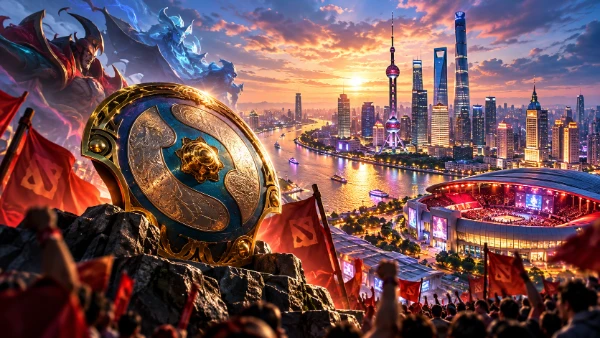
The International returned to Shanghai in August 2026 at a moment when Dota 2 needed more than another world championship in a large arena. Seven years had passed since the Chinese city hosted TI9 in 2019, enough time for the professional scene, Valve’s tournament structure and the balance between Dota’s major regions to change significantly. TI 2026 therefore carried a meaning that went beyond deciding who would lift the Aegis of Champions. Sixteen teams arrived for a competition running from 13 to 23 August, with the decisive four days staged at the SPD Bank Oriental Sports Center. For Chinese supporters, it was the long-awaited return of Dota’s most prestigious event. For international fans and professional teams, it was a reminder that China remains an important part of the game’s competitive history. Shanghai ultimately delivered a tournament that connected different generations of Dota, brought a genuinely international audience back to China and produced another major chapter in The International’s history.
Shanghai Reconnected The International with a Historic Dota 2 Region
China has been closely connected with The International since the competition’s early years. Chinese organisations became regular title contenders during Dota 2’s first decade, and Invictus Gaming, Newbee and Wings Gaming all won the Aegis between 2012 and 2016. Other Chinese teams repeatedly reached the final stages without winning the tournament, creating rivalries with leading European, CIS and North American squads. This history helped build a large domestic audience that treated TI not simply as another esports event but as the defining tournament of the competitive season. Bringing the championship back to China in 2026 therefore reunited the event with supporters who had followed many of its most memorable teams and players for more than a decade.
The location also carried obvious historical weight because Shanghai had already hosted TI9 in 2019. That edition ended with OG defeating Team Liquid 3-1 in the Grand Final to become the first organisation to win The International twice and the first to secure consecutive TI titles. PSG.LGD finished third after losing to Liquid on the final day, meaning the home crowd came close to seeing a Chinese team challenge for the Aegis but did not get a Chinese finalist. When TI returned seven years later, Shanghai became the only city apart from Seattle to host the tournament more than once. That placed the city in a very small group within Dota history and made the choice feel more deliberate than simply selecting another large international venue.
The seven-year interval also changed how the return was perceived. During that period, The International travelled through several European locations, the competitive calendar became less centred on a single season-long circuit, and the dominant teams increasingly came from Europe and the wider CIS scene. Chinese Dota, meanwhile, went through roster changes, organisational uncertainty and periods in which its teams struggled to reproduce the international results of the previous decade. Hosting TI in Shanghai could not solve those competitive problems on its own, but it put China back at the centre of the global Dota conversation for the most important event of the year. That visibility mattered for players, organisations, sponsors, event operators and younger fans who had never previously experienced an International on Chinese soil.
A Seven-Year Gap Made the Return More Significant
Seven years is unusually long in esports. Careers can begin and end within that period, organisations can disappear, and an entire generation of supporters can start following a game without ever attending its biggest championship in their own country. Many Chinese fans who watched TI9 in 2019 were therefore returning to a familiar event in very different circumstances, while others were experiencing a home International for the first time. The audience reflected that broader appeal. Shanghai authorities reported that, by 25 June, tickets had already been purchased by supporters from 73 countries and regions. That figure showed that TI’s return to China was not only a domestic occasion; it remained capable of attracting people willing to travel internationally for several days of Dota.
Valve also retained the scale expected from an International while making the live event relatively easy to understand for spectators. Sixteen teams entered the competition, with the group stage running from 13 to 16 August before eight teams advanced to the arena stage. The main event then took place from 20 to 23 August at the SPD Bank Oriental Sports Center. The schedule created a clear separation between the early elimination phase and the matches played in front of the large live crowd. For viewers who do not follow every professional tournament during the year, that structure helped TI retain its familiar role as the point where the season’s leading teams finally met under the greatest pressure.
The return also restored an element that online broadcasts cannot fully reproduce: a major Chinese crowd reacting to elite Dota in real time. The atmosphere around Chinese teams, former stars and internationally recognised players has historically been one of the distinctive features of tournaments held in the country. Shanghai offered that environment again, while the international attendance prevented the event from feeling geographically isolated. This combination matters for a game with a mature community. Dota 2 no longer needs to prove that esports can fill an arena; it needs major events to feel relevant to different parts of its worldwide audience. TI 2026 achieved that by taking the game’s most recognisable tournament back to a region that had spent years watching it from abroad.
TI 2026 Showed Why a World Championship Needs More Than the Matches
The impact of TI 2026 extended beyond the doors of the arena. Shanghai’s Pudong New Area linked the championship with commercial districts, restaurants, shopping areas and services for international visitors. Ticket holders were offered various benefits at participating businesses, while some restaurants extended their opening hours to accommodate spectators after matches. Pudong International Airport also introduced shopping-related offers for travellers, and local districts used the event as part of a broader programme connecting esports with tourism and entertainment. These details may appear separate from competitive Dota, but they reveal something important about the current scale of major esports events: a successful championship is increasingly expected to function as a city event rather than simply several days of matches inside one building.
For Dota 2, that wider presence is particularly valuable because The International has always depended heavily on a sense of occasion. Other tournaments can offer strong fields, significant prize money and high-level production, but TI remains the event associated with the Aegis, careers defined by a single series and players becoming part of the game’s history. When the host city visibly participates, that distinction becomes easier to maintain. Fans arriving in Shanghai were not attending an anonymous studio event; they were entering a city where the tournament had been incorporated into public-facing activities and local business initiatives. That made the championship more tangible for travelling spectators and gave local residents multiple opportunities to encounter Dota even without attending every day of the competition.
This model also demonstrates why returning to established esports cities can be useful. Shanghai already has large venues, transport connections, international visitor infrastructure and experience staging significant gaming events. TI 2026 was followed in the city’s esports calendar by Valorant Champions later in the year, illustrating how major publishers increasingly view Shanghai as a dependable destination for global competitions. For Valve, choosing such a location reduced the need to introduce Dota to an unfamiliar market from the beginning. The audience, event infrastructure and local gaming culture were already present. The challenge was instead to make The International feel important again after seven years away, and the scale of activity around the tournament helped achieve that.
Chinese Dota Returned to the Centre of the International Conversation
The tournament also gave Chinese Dota something that cannot be measured only through final standings: sustained attention at the highest level. Xtreme Gaming entered TI 2026 with familiar names including Ame, NothingToSay, Xxs, fy and xNova, while Vici Gaming and other China-linked organisations or players contributed to the wider home story. The crowd had recognisable figures to support, and international viewers were again watching Chinese teams compete in China rather than encountering them only at overseas tournaments. For a regional scene, repeated visibility of this kind is important because professional ecosystems depend on more than winning trophies. They also need spectators who follow teams, young players who see a viable competitive path and organisations that believe there is enough interest to justify continued investment.
At the same time, TI 2026 did not produce a simple story of Chinese competitive revival. The championship remained highly international, and the final was contested by Team Spirit and TEAM VISION rather than a Chinese roster. That distinction is worth keeping because the significance of the Shanghai event does not depend on presenting the host region as suddenly dominant again. Its importance lies in reconnecting a major part of the Dota community with the world championship while allowing the results to remain genuinely open. The best case for a global esport is not a tournament designed to guarantee success for the host region, but one in which local supporters can engage directly with elite international competition.
That may ultimately be more useful for Chinese Dota than a short-lived narrative built around one result. The domestic scene has a long record of producing exceptional players, tactical ideas and organisations, but the global competitive environment has changed. Teams now recruit more internationally, players move between regions more frequently and successful line-ups are less likely to fit neatly into older regional identities. TI in Shanghai gave Chinese teams and players a benchmark against the strongest opposition while also exposing local spectators to the current shape of top-level Dota. If the event encourages greater interest in domestic competitions or motivates organisations to maintain stronger rosters, its influence will continue beyond the final match played in August.
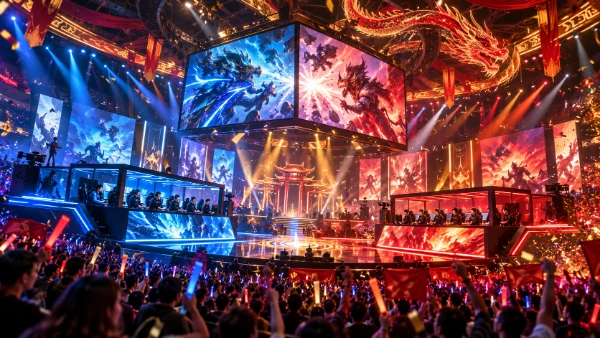
The Shanghai Final Added Another Major Chapter to TI History
The competitive finish gave the tournament an ending worthy of its return. Team Spirit met TEAM VISION in the Grand Final on 23 August after a difficult route through the event. TEAM VISION had already defeated Spirit twice: 2-0 during the group stage and 2-1 in the upper-bracket phase. That made the final more than a meeting between the last two surviving teams. Spirit had to solve an opponent that had repeatedly beaten them during the same tournament, while VISION had evidence that its approach could work against one of the most successful squads in Dota history. The resulting best-of-five reached all five games, with Team Spirit eventually winning 3-2 at the SPD Bank Oriental Sports Center.
The result gave Team Spirit its third Aegis after previous championships in 2021 and 2023. No team had won The International three times before. OG had established the previous benchmark with consecutive titles in 2018 and 2019, the second of those won in the same city. Seven years later, Shanghai again became the setting for a new record in TI history. That coincidence connected the two editions in an unexpectedly neat way: TI9 produced the first two-time champions, while TI 2026 produced the first three-time champions. For supporters who remember both tournaments, the venue is now associated with two separate moments when the limits of what a Dota team could achieve at The International were rewritten.
Spirit’s victory also demonstrated why TI continues to matter despite changes elsewhere in professional Dota. The annual calendar contains numerous international competitions, and leading squads now meet each other repeatedly throughout the year. Yet winning those events does not carry the same historical weight as lifting the Aegis. TI condenses a season into a small number of matches where previous form provides no guarantee. Spirit’s path in Shanghai illustrated that clearly: the eventual champions suffered defeats during the competition, lost twice to the team they would later face in the final, dropped into the lower bracket and still recovered to win the title. That type of tournament story is one reason The International remains distinct from an ordinary stop on the professional calendar.
What Shanghai 2026 Means for the Future of Dota 2 Esports
The clearest lesson from TI 2026 is that Dota’s established regions still have value even when competitive power shifts elsewhere. China did not need to provide the champion for Shanghai to be a meaningful host. The event demonstrated that a mature esports title can return to a historically important market after a long absence and still attract an international audience. For future editions of The International, that creates useful options. Valve can continue moving the championship between regions while occasionally returning to cities with strong Dota history, rather than treating each host location as a one-off choice. Seattle represents the earliest identity of TI, while Shanghai has now established a history of its own.
The tournament also offered evidence that Dota 2 can still support a substantial live event fifteen editions into The International. That matters because longevity is one of the greatest challenges in esports. Games, teams and tournament series compete constantly for attention, and past popularity alone cannot guarantee that spectators will continue travelling to events. TI 2026 had to persuade fans to attend a championship for a game released more than a decade earlier, including visitors making international journeys to China. The reported ticket demand from dozens of countries and regions, combined with the visible city-wide activity around the event, showed that The International retains an audience that sees the championship as something worth experiencing in person rather than only through a livestream.
Most importantly, Shanghai reminded the Dota community that geography can still give an esports event character. TI 2026 was not memorable merely because it happened in another large arena. It mattered because the championship returned to a city with a previous International, to a country deeply connected with the competitive history of Dota, after a seven-year absence. It brought international spectators back to China, put local teams and players in front of a home audience and ended with Team Spirit becoming the first three-time TI champions. For Dota 2, those elements combined into something more valuable than nostalgia. They showed that The International can use its own history to create new stories, and that returning to an important region can make a long-running world championship feel significant again.