Vintage’s Lifetime Dota 2 Ban: What the ESIC Investigation at Esports World Cup 2026 Revealed About Match-Fixing
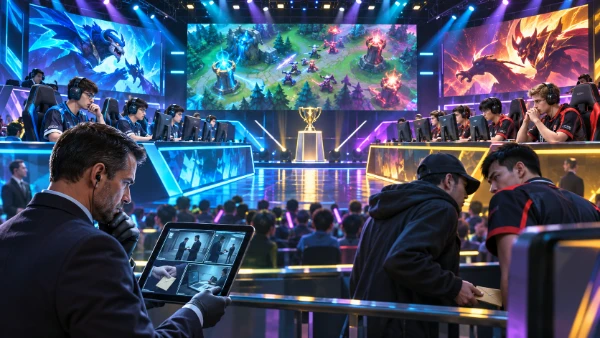
The Esports World Cup 2026 became the centre of a major Dota 2 integrity scandal after the Esports Integrity Commission (ESIC) uncovered an attempt to manipulate a match involving the South American team PTime, also known as PlayTime. On 10 September 2026, the commission announced a lifetime competitive ban for Juan David Angulo Nicho, known as Vintage, and a five-year suspension for Oswaldo Herrera Martínez, known as DarkMago. Investigators established that Vintage had participated in an arrangement intended to make his team lose a series against Team Liquid by 0–2 in exchange for a financial reward. Although that intended result was never achieved, the disciplinary findings exposed serious breaches of competitive integrity and raised important questions about how professional Dota 2 handles corruption, reporting obligations and accountability.
How the Vintage Match-Fixing Scandal Developed at Esports World Cup 2026
The investigation began during one of the most important international competitions on the Dota 2 calendar. PTime had entered Esports World Cup 2026 with a roster featuring established South American competitors, including DarkMago, Frank, Scofield, Elmisho and Wits, with Vintage associated with the team in a coaching capacity. The organisation faced an opportunity to compete against internationally recognised opponents, but its tournament participation was disrupted by information concerning a possible attempt to influence competitive results. The allegations were particularly serious because they concerned deliberate interference with a match outcome rather than an ordinary dispute over competitive rules or player behaviour.
On 13 July 2026, ESIC received information about a corrupt approach connected with the tournament. As the competition’s designated integrity partner, the commission began an urgent preliminary assessment and coordinated with the Esports Foundation to protect the investigation. The following day, ESIC announced provisional suspensions against Vintage and DarkMago. Both individuals were immediately excluded from Esports World Cup 2026 and events organised by ESIC members. Vintage also faced restrictions on coaching, strategic assistance, management and other team-related activities. At that stage, these measures were precautionary rather than findings of guilt, and the commission emphasised that its investigation remained open.
The consequences for PTime extended beyond the two suspended individuals. The Esports Foundation removed the team from the Dota 2 competition because it could no longer satisfy the applicable eligibility requirements. That administrative decision was separate from the disciplinary process, meaning the removal itself did not establish wrongdoing by every member of the roster. ESIC continued gathering evidence and interviewing relevant individuals before issuing formal notices of charge on 6 August. The investigation eventually concluded with the announcement of separate sanctions on 10 September 2026. The approximately two-month process demonstrated how quickly an integrity concern can affect a tournament while a more detailed assessment of individual responsibility continues.
What Investigators Established About the Attempted 0–2 Defeat Against Team Liquid
The central finding concerned an arrangement intended to make PTime lose its series against Team Liquid by exactly two games to none. According to ESIC’s published disciplinary decision, Vintage had participated in an agreement or effort to produce that result and had agreed to accept a financial reward connected with the proposed manipulation. Investigators also established that he had solicited or facilitated another participant’s involvement. These findings went beyond the possibility of suspicious gameplay: the commission determined that there had been an actual attempt to improperly influence a competitive series. However, the publicly released decision did not establish that the intended 0–2 outcome had occurred.
One particularly important detail is that ESIC did not prove that Vintage had received a completed corrupt payment. The distinction matters because an agreement to accept money for manipulating a match is not the same as evidence that money was ultimately transferred. Nevertheless, the commission found that the agreement and attempted manipulation were sufficient to establish serious breaches of its Anti-Corruption Code. A match-fixing offence does not necessarily depend on the targeted score being achieved or the proposed payment being completed. In this case, the corrupt arrangement itself, the effort to influence the match and the involvement of another participant were central to the findings.
The investigation also identified failures relating to disclosure and cooperation. ESIC determined that Vintage had not properly reported relevant integrity information and had failed to cooperate fully and truthfully during the investigation. The commission considered evidence from interviews, communications, internal team materials, tournament records, gameplay observations and betting intelligence from multiple sources. Financial and device information was also assessed where available. The published account does not disclose every communication or supporting document, so it would be inaccurate to invent the amount of the proposed reward, identify an unconfirmed betting organiser or attribute specific in-game mistakes to corruption. The established findings are serious without relying on details that have not been made public.
Why ESIC Issued a Lifetime Ban to Vintage and Five Years to DarkMago
ESIC found all six charges brought against Vintage proven. They included improper influence over a match, agreeing to accept a financial reward, facilitating another participant’s involvement, failing to disclose relevant information and breaching obligations of honesty and cooperation. The commission applied provisions of both its Anti-Corruption Code and Code of Conduct, including Article 2.1.1 concerning match manipulation, Article 2.1.3 concerning improper rewards and Article 2.1.4 concerning the involvement of other participants. Further breaches concerned disclosure duties and the requirement to provide truthful, complete information during an investigation. Taken together, these findings formed the basis for the most severe sanction imposed in the case.
Vintage’s lifetime exclusion is recognised from 14 July 2026, the date on which his provisional suspension began. The sanction applies to competitions and activities covered by ESIC and its participating organisations, subject to their authority to enforce it. Its scope is broader than simply preventing Vintage from appearing as a professional player. Covered activities include coaching, tactical analysis, team management, substitute appearances and support roles. This distinction is significant in professional Dota 2, where former players frequently continue their careers as coaches, analysts or managers. The decision therefore removes Vintage from multiple professional roles within the competitions recognising ESIC’s disciplinary authority.
DarkMago received a different sanction because the final findings against him were materially different. ESIC established that he had been directly exposed to a discussion concerning match-fixing and had subsequently become aware of communications indicating corrupt conduct. He failed to report the relevant information as required under the integrity rules. Crucially, the commission did not pursue the alternative active match-manipulation and reward charges against him in its final decision. DarkMago’s five-year exclusion therefore rested on reporting and integrity failures, not a final finding that he personally arranged the attempted defeat or accepted a payment. His ban runs from 14 July 2026 until the end of 13 July 2031.
Why Failing to Report Match-Fixing Can Lead to a Serious Suspension
One of the most important lessons from the DarkMago decision is that professional players have obligations even when they are not found responsible for organising a corrupt arrangement. ESIC’s rules require participants to disclose approaches, invitations or information indicating possible match manipulation. A player who learns that someone is attempting to influence a result cannot necessarily avoid disciplinary responsibility simply by declining to participate. Reporting the information allows investigators to intervene, protect other competitors and examine whether betting markets or tournament results are being targeted. Without that obligation, an attempted fix could remain concealed even when several people knew about the arrangement.
In DarkMago’s case, the commission identified breaches of Articles 2.4.4 and 2.4.5 of the Anti-Corruption Code, which concern reporting corrupt approaches and information indicating corrupt conduct. It also found violations of relevant Code of Conduct provisions. ESIC considered his formal responses before reaching its decision, making the five-year sanction the outcome of an individual disciplinary assessment rather than an automatic penalty based on his association with Vintage. This is an essential distinction when interpreting the scandal: two people may be investigated in the same case but receive different findings because their conduct, knowledge and obligations were not identical.
Both Vintage and DarkMago retained the right to appeal their first-instance disciplinary decisions to the International Games and Esports Tribunal (IGET). An appeal provides a formal route for challenging a sanction through the applicable disciplinary procedures, although the existence of that right does not itself invalidate the findings. As announced on 10 September, the sanctions replaced the provisional restrictions imposed in July. ESIC also notified its members of their responsibilities to recognise the decisions, prevent prohibited participation and report attempts to circumvent the restrictions. The case illustrates that disciplinary enforcement depends not only on an investigating authority but also on tournament organisers and affiliated organisations applying the resulting decisions consistently.

What the Esports World Cup 2026 Investigation Means for Competitive Dota 2
The Vintage case demonstrates that attempted match-fixing can damage competitive integrity even when the intended sporting result is not achieved. Professional Dota 2 matches involve numerous strategic decisions, including hero drafts, lane assignments, rotations, objective control and the timing of major team fights. Many legitimate decisions carry significant risks, and even elite competitors make costly mistakes. For that reason, unusual gameplay alone cannot reliably establish deliberate manipulation. ESIC’s investigation examined gameplay and drafting information alongside communications, interviews, tournament records and betting intelligence. The broader evidential approach was important because investigators needed to distinguish genuine competitive errors from conduct connected with an improper agreement.
The intended 0–2 defeat against Team Liquid also highlights why betting-related corruption can focus on a specific series score rather than simply favouring one team. A best-of-three Dota 2 series can finish 2–0 or 2–1 for either side, creating different possible betting outcomes. An arrangement targeting a precise result could potentially serve a wager linked to the series score, although ESIC’s public findings do not identify the exact betting market, the size of any wager or a completed payment to Vintage. The relevant fact is that investigators established an effort to manipulate the series towards a predetermined outcome. That conduct undermines the basic expectation that teams are competing to achieve the best result available to them.
The wider consequences extend to players who had no proven involvement in the misconduct. When a team is removed from an international tournament, its other members may lose competitive opportunities, prize-money prospects and valuable exposure to major organisations. Opponents can also face altered schedules or changes to the expected competitive field. In the PTime case, the team removal was an administrative consequence of eligibility requirements, not a collective finding that all players had participated in match-fixing. Maintaining that distinction is necessary for fair reporting. Integrity investigations should identify individual responsibility without treating every teammate, coach or staff member as guilty merely because they belonged to the same organisation.
How Tournament Organisers and Players Can Reduce Match-Fixing Risks
The investigation provides several practical lessons for tournament organisers. Integrity procedures need to operate before, during and after competition, particularly at events involving international teams and substantial commercial attention. Clear reporting channels, confidential handling of allegations and access to independent investigators help suspicious approaches reach the appropriate authorities quickly. Organisers also need defined procedures for temporary restrictions when credible concerns arise. The July suspensions illustrate the purpose of such measures: protecting a competition and preserving the investigation without presenting an allegation as a final disciplinary finding. A well-managed process must balance immediate competitive protection with the procedural rights of those being investigated.
Professional players and coaching staff also need to understand that corruption is not limited to personally placing a bet or deliberately throwing a match. Discussing a proposed fixed result, agreeing to receive money, encouraging another participant or concealing a corrupt approach can each create disciplinary exposure under the applicable rules. Individuals who encounter suspicious offers should preserve relevant communications and report the matter promptly through the tournament’s authorised integrity procedures or directly to ESIC. The commission accepts integrity reports at [email protected]. Prompt reporting is especially important where an approach involves teammates or staff, because personal relationships do not remove the obligation to protect the fairness of competition.
As of November 2026, the published ESIC decision remains a significant example of how attempted corruption and failures to report it can produce different but severe consequences. Vintage received lifetime ineligibility after findings involving an agreement to manipulate the Team Liquid series, a proposed financial reward, facilitation and additional integrity breaches. DarkMago received five years for failing to disclose information about corrupt conduct, without a final finding of active participation in the attempted fix. The targeted result was not achieved, and a completed payment to Vintage was not proven. Those distinctions define the case. Its lasting significance lies in showing that competitive integrity depends on preventing corrupt arrangements, investigating credible evidence and holding participants accountable for both their actions and their reporting obligations.