LoL Esports 2026: Calendar, New Events and the Patch Factor as the Main Forecasting Risk
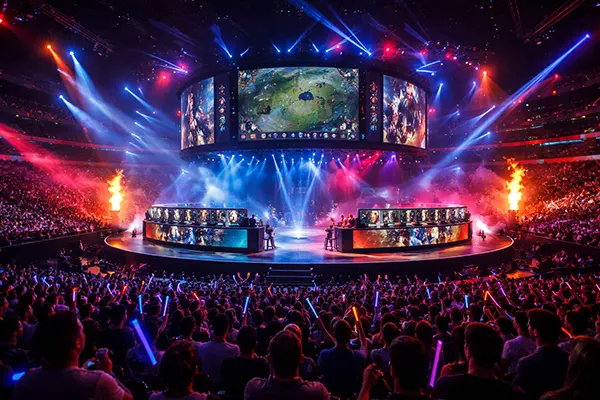
The 2026 season of League of Legends Esports has become one of the most structurally complex and strategically demanding years in the game’s competitive history. Riot Games continues refining its regional ecosystem, expanding cross-regional tournaments and tightening the competitive calendar, while frequent balance patches increasingly influence match outcomes. For analysts, bettors and team staff alike, the so-called “patch factor” has evolved into the single most unpredictable variable in forecasting results. Understanding the 2026 calendar, new tournament formats and the rhythm of balance updates is no longer optional — it is fundamental.
The 2026 Competitive Calendar: Structure, Splits and Global Events
In 2026, the LoL Esports calendar remains anchored around two primary seasonal splits in major regions — Winter/Spring and Summer — but the sequencing has been adjusted to create a more compressed international schedule. The LEC, LCK, LPL and LCS each begin their opening split in January, concluding by early April to allow space for the Mid-Season Invitational. Regional playoffs are shorter than in 2024–2025, reflecting Riot’s push towards higher match density and fewer “dead weeks” in broadcast schedules.
The Mid-Season Invitational 2026 retains the two-stage format introduced earlier in the decade: Play-In followed by a double-elimination Bracket Stage. However, seeding rules have been recalibrated to reward performance depth rather than single-split dominance. Regions with stronger cumulative international results across 2024–2025 receive additional direct placements in the Bracket Stage, raising the competitive threshold for emerging regions.
The World Championship 2026 expands its Swiss Stage match days, reducing long breaks between rounds and intensifying adaptation demands. With patches typically locked two weeks before Worlds, teams must commit to strategic directions earlier than before. The calendar’s tighter transitions between domestic finals and international preparation have reduced scrim windows, placing more emphasis on real-time analytical infrastructure.
New Event Additions and Format Experiments in 2026
One of the defining changes in 2026 is the formal introduction of an officially sanctioned inter-regional exhibition series during the summer break. Unlike previous All-Star formats, this event features mixed-region draft rosters competing under experimental rule sets. While it does not award championship points, it offers valuable data on cross-meta adaptability and player champion pools.
Regional leagues have also adopted limited Fearless Draft formats during select regular-season weeks. This rule prevents teams from reusing champions across a series, significantly affecting preparation models. Analysts tracking pick-ban tendencies must now evaluate depth metrics rather than single-champion proficiency rates.
Finally, Riot has piloted structured third-place qualification matches in certain regions to determine final international seeds. These matches often occur under slightly different patch cycles than the main playoffs, creating micro-meta divergences that complicate comparative performance assessment.
The Patch Cycle in 2026: Frequency, Scope and Competitive Timing
League of Legends in 2026 continues operating on a bi-weekly patch cadence, but the scale of adjustments has become more targeted and data-driven. Riot’s live balance team increasingly relies on professional match telemetry, resulting in sharper corrections to overperforming jungle and support picks within one or two cycles. This narrows the lifespan of dominant strategies.
Importantly, competitive patch locking policies differ between domestic leagues and international tournaments. Most major leagues apply a one-week delay after live release before implementing a patch on stage. International events, however, freeze on a specific version well in advance. This discrepancy can create transitional instability for teams that qualify late from regional playoffs.
Pre-Worlds patches remain the most scrutinised updates of the year. In 2026, Riot has focused on limiting extreme snowball mechanics and reducing early-game jungle volatility. While this improves competitive clarity, it simultaneously disrupts teams that rely on high-tempo early aggression, forcing abrupt stylistic pivots.
Why the “Patch Factor” Disrupts Predictive Models
The core forecasting challenge in 2026 is not mechanical skill disparity but adaptability velocity. When a patch meaningfully alters itemisation efficiency or lane priority patterns, historical win-rate datasets lose predictive strength. A top laner dominant on scaling tanks may struggle if the patch suddenly buffs split-push duelists.
Statistical models that rely purely on seasonal averages now underperform compared to dynamic patch-adjusted systems. Advanced analysts incorporate patch-relative metrics: gold difference at 15 minutes within the current version, jungle proximity changes and objective control variance after balance shifts. Without version-specific segmentation, projections become outdated within weeks.
Moreover, champion pool elasticity has become a measurable performance indicator. Teams with broader draft flexibility absorb patch volatility better than narrowly specialised rosters. In 2026, organisations invest more heavily in analytical staff capable of simulating draft trees under hypothetical balance adjustments.

Strategic Implications for Teams, Analysts and Bettors
For professional teams, the 2026 environment demands compressed adaptation cycles. Coaching staffs increasingly run parallel scrim blocks on both current and upcoming patches, anticipating balance changes before official implementation. This proactive approach reduces shock impact when updates go live.
Broadcast analysts and content creators must now contextualise statistics with patch framing. A team’s five-match win streak carries different weight if achieved across two balance versions. Ignoring this nuance leads to oversimplified narratives about form and momentum.
For bettors and performance forecasters, patch timing relative to match schedules is critical. A roster built around dominant engage supports may lose structural advantage overnight if a patch shifts sustain or enchanter viability. Evaluating roster flexibility and coaching responsiveness becomes more important than raw standings.
Long-Term Outlook: Stability vs Meta Volatility
Looking ahead, Riot’s 2026 direction suggests continued commitment to regular balance iteration rather than seasonal stability. While this sustains viewer engagement, it ensures that volatility remains embedded within competitive forecasting frameworks.
Regions historically strong in structured macro play, such as the LCK, may benefit from slower, objective-focused patches. Conversely, hyper-aggressive regions thrive when early-game tempo tools are efficient. Therefore, patch philosophy indirectly influences regional power distribution at international events.
Ultimately, the “patch factor” has evolved from background variable to primary risk multiplier. In 2026, successful prediction in LoL Esports is no longer about identifying the strongest roster on paper. It is about understanding which team adapts fastest when the rules of the game subtly — but decisively — change.