Coaching Staff in Top Teams: How the Coach, Analyst and Performance Coach Roles Differ
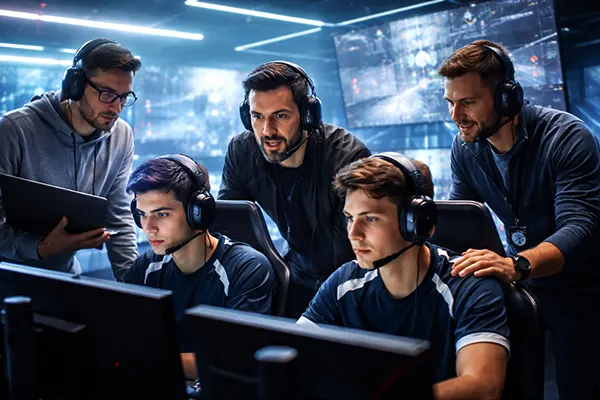
In elite esports, the coaching staff is no longer “one person behind the players.” By 2026, top teams in Counter-Strike 2, VALORANT, League of Legends and Dota 2 typically rely on a structured support group, because the modern competitive environment is too complex for a single coach to handle alone. Strategy, opponent research, schedule planning, communication quality, mental resilience and physical wellbeing all directly affect match outcomes. That is why the roles of coach, analyst and performance coach have become distinct and increasingly specialised. Each role solves a different problem: the coach builds the team’s direction and decision-making model, the analyst turns matches into actionable patterns, and the performance coach improves how players execute under pressure while staying healthy through long seasons.
Why Elite Teams Separate Coaching Roles in 2026
The first reason is the speed of change. Meta shifts, frequent updates, and evolving playstyles force teams to learn faster than ever. When a team has a dedicated analyst, preparation becomes more precise and less chaotic. When a team has a performance coach, players are more likely to remain stable through intense schedules and high-pressure events.
The second reason is efficiency inside daily practice. Scrims and review sessions are limited by time and mental energy. A coach needs to manage learning priorities, not drown the team in information. An analyst can handle deep research and deliver the key points in a usable format. A performance coach can keep practice consistent by preventing burnout, improving routines and protecting focus.
The third reason is accountability and measurable progress. Organisations want to know what is improving and what is not. Analysts track trends and outcomes in a structured way. Performance coaches monitor habits, workload and stress indicators. Coaches use that information to adjust the team’s plan and keep everyone aligned.
How Staff Structures Usually Look in Top Teams
In 2026, many elite organisations run a core structure: head coach + analyst + performance coach. Some teams also add an assistant coach, a second analyst, or a game-specific specialist (for example, a draft coach in MOBAs or a utility-focused assistant in tactical shooters). The exact setup depends on budget, game format and the tournament calendar.
In CS2 and VALORANT, the coach and analyst often work tightly together on opponent scouting, anti-strats and map preparation, while the performance coach focuses on routines, communication clarity and resilience across a LAN event. In LoL and Dota 2, analysts frequently dive into drafts, lane matchups and objective timings, while performance staff helps players handle long series, travel fatigue and emotional swings.
The most important shift is that these roles are no longer optional. Teams that invest in staff usually gain consistency. Teams that do not often rely on raw talent and short-term momentum, which becomes harder to sustain against well-prepared opponents.
The Coach Role: Leadership, Identity and Competitive Direction
The head coach is responsible for the team’s overall direction. This includes defining a clear style of play, choosing priorities for practice, and maintaining a culture where players can improve without constant internal conflict. A coach’s impact is often seen in how the team responds when plans fail, not only in how well they execute a prepared strategy.
In many esports, the coach cannot actively call every decision during live rounds or fights, which makes preparation even more critical. A strong coach builds a decision-making framework the players can follow independently. That means teaching not only “what to do,” but “how to think,” so the team can adapt mid-match.
Coaches also manage communication and feedback systems. Elite teams rarely collapse because they lack mechanical skill; they collapse because they cannot stay aligned under pressure. The coach shapes how criticism is delivered, how mistakes are processed, and how players regain trust after difficult losses.
What Great Coaches Do Differently in 2026
Great coaches simplify complexity. Instead of trying to fix everything at once, they select a few high-impact priorities and build repeatable habits around them. This creates clarity under pressure, where players do not have time to analyse every detail.
They protect the training process. Scrims without purpose, review sessions that turn into blame, and constant changes after a single loss are common problems even at a high level. Strong coaches set a structure: clear daily goals, targeted review, and realistic timelines for improvement.
They also use staff effectively. A coach who knows how to integrate analyst data and performance feedback makes faster, smarter decisions. In 2026, coaching is not only tactical knowledge; it is leadership plus system-building.
The Analyst Role: Opponent Scouting, Pattern Recognition and Data-to-Action Work
The analyst’s role is to transform information into advantage. That includes studying opponents, identifying tendencies, tracking trends in the meta, and helping the team understand what repeatedly wins or loses games. Analysts do not exist only for statistics; they combine numbers with video and context.
One key analyst task is opponent scouting. In tactical shooters, this may include map preferences, common setups, utility patterns, mid-round habits and decision timing. In MOBAs, this may include drafting patterns, lane priorities, objective setups and how a team responds to pressure. The analyst then turns those discoveries into practical points the team can act on.
Analysts also support internal improvement. They help measure whether changes actually work. If the coach wants better conversion after early advantages, the analyst can track it across weeks and highlight where the team still bleeds rounds or loses tempo. This makes feedback less emotional and more concrete.
What Analysts Typically Deliver to the Team
In most top teams, analysts provide structured “opponent packets” before a match or series. These are not long essays. They are usually built around a handful of key patterns, with clips or examples that the players can quickly understand. The goal is to give the roster a few strong cues to recognise in real time.
Analysts also prepare review materials: grouped clips of recurring mistakes, successful patterns, and moments where communication broke down. The best analysts do not overload the team with detail. They highlight what matters most for the next stage of development.
Finally, analysts help the team stay current. In 2026, meta analysis is continuous. Analysts track how top competitors adapt to updates, what strategies become popular, and which ideas might fit their own roster. This is often where innovation begins.
The Performance Coach Role: Consistency, Health and Mental Resilience
Performance coaches exist because esports performance is not only about knowledge and mechanics. It is also about the body and nervous system. Long practice hours, intense travel schedules, irregular sleep and constant public pressure can quickly reduce consistency. In 2026, more elite organisations treat performance support as a competitive edge, not a luxury.
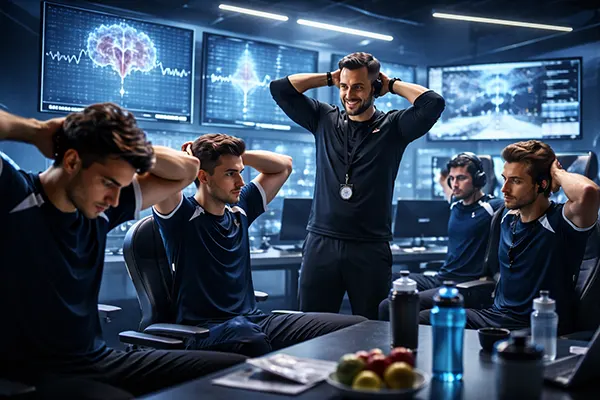
A performance coach focuses on routines and long-term sustainability. This can include sleep hygiene, basic nutrition habits, posture and injury prevention, structured breaks, recovery planning and tournament-day routines. Small physical issues such as wrist or back strain can reduce precision and reaction speed, especially across long series.
The performance coach also supports mental skills and emotional stability. This often includes stress control, attention management, anti-tilt routines, confidence rebuilding after mistakes, and communication under pressure. The aim is not to make players feel “calm” in a generic way; the aim is to make them reliable in high-stakes moments.
How Performance Coaching Shows Up in Daily Training
In daily practice, performance coaching often looks like systems rather than speeches. Players may follow structured warm-ups, scheduled breaks, consistent pre-scrim routines and cooldown habits after long sessions. These routines reduce variability and improve the chance that players perform close to their best level across multiple days.
Performance coaches also work with communication habits. Many teams struggle not because they lack strategy, but because they cannot exchange information cleanly under stress. A performance coach can run exercises to improve callout clarity, active listening, emotional control and conflict repair, so the team can stay connected when matches become chaotic.
Finally, performance coaches help teams survive long seasons. Burnout remains a major problem across many esports. Teams with strong performance support often show better stability, fewer collapses mid-year and stronger form at major events. In 2026, that kind of consistency is often the difference between “a good team” and “a title-winning team.”